
Total Items
0

0 Item(s)
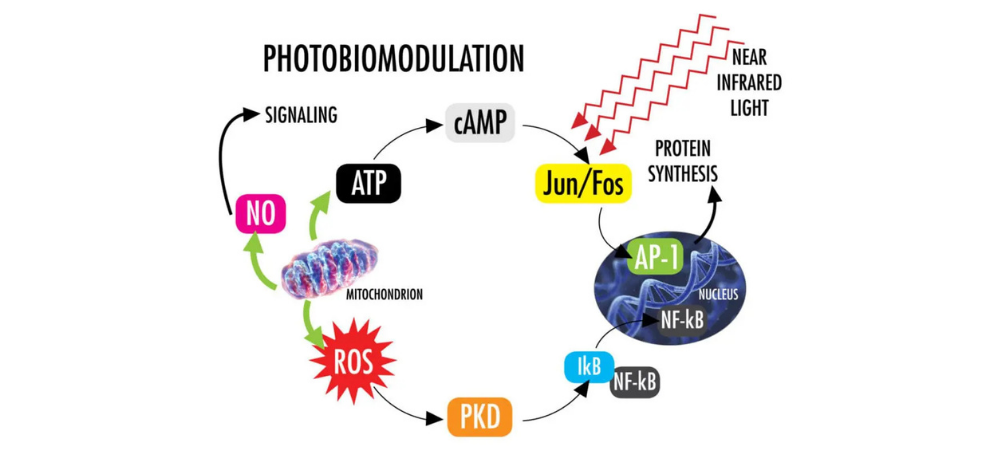
This review paper covers the current theory on basic mechanisms of laser therapy. Cytochrome C oxidase is identified as the primary absorber of light in the near infrared leading to cellular changes related to ATP, NO and ROS levels. The “optical window” for tissue penetration is identified from 600 nm to 1.4 mm. A review of animal and clinical studies is also presented for applications including wound healing, nerve regeneration and numerous musculoskeletal conditions.
This page summarizes Mechanisms of Low Level Light Therapy. The page gives the source as: Proc. of SPIE Photonics. 2006; 6140: 614001-01-12. doi: 10.1117/12.646294. It was posted on Chattanooga Rehab on May 7, 2020, in the Laser Therapy category.
Chattanooga® is Enovis’ (NYSE: ENOV) signature rehabilitation brand, founded in 1947 in Chattanooga, Tennessee. Read more on the About Us page.
Students, researchers and clinicians who want a review of the basic mechanisms of low level light therapy.
It summarizes one published item and is not a treatment protocol. This page summarizes a published study. The findings and conclusions belong to the study authors, and the summary is not a substitute for reading the full paper or for your own clinical judgment. Neither DJO, LLC nor any of the Enovis companies dispense medical advice.
A summary of the study titled Mechanisms of Low Level Light Therapy, posted on Chattanooga Rehab on May 7, 2020.
Proc. of SPIE Photonics. 2006; 6140: 614001-01-12. doi: 10.1117/12.646294.
The review covers the current theory on basic mechanisms of laser therapy.
Published: Proc. of SPIE Photonics. 2006; 6140: 614001-01-12. doi: 10.1117/12.646294
Read Full Study